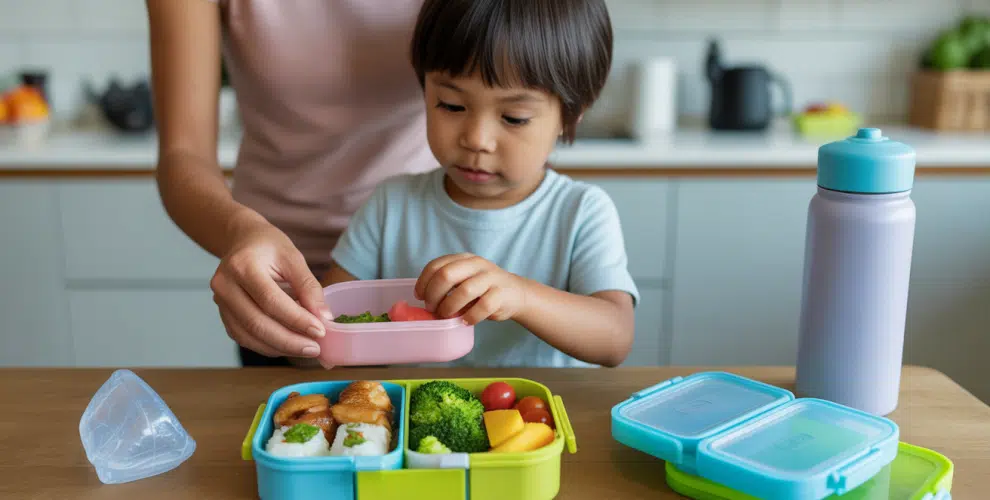

Kuala Lumpur life moves fast—school runs, traffic, meetings, and suddenly it’s lunch‑packing time again. This blueprint helps you plan a full week of balanced preschool meals with KL‑friendly ingredients, quick prep strategies, and gentle picky‑eater psychology that actually works. You’ll also find hydration and food‑safety tips for our heat and humidity, plus links you can trust and internal resources to see how food fits into your child’s learning day.

1) Smart preschool nutrition principles (no guilt, no fads)
- Balance beats perfection: Aim for a protein + complex carb + fruit/veg + healthy fat. A little treat is okay if the base is solid.
- Portion matters: Small, repeated exposures trump big “finish it” battles. Think palm‑sized portions and tiny tasters.
- Colour and shape: Preschoolers are visual. Use colour and predictable shapes to increase acceptance.
- Routine over randomness: A weekly rhythm lowers decision fatigue and sets predictable expectations.
For child‑friendly nutrition and development basics, see concise guides from UNICEF Parenting and general wellbeing topics via the WHO child health pages. To see how food, movement, and rest support learning in our classrooms, browse the Curriculum and quick clips in the Video Gallery.
2) Your weekly planner: 5 balanced lunchbox templates
Monday — Rice + Simple Protein
- Chicken rice balls or tofu cubes
- Steamed broccoli + carrot coins
- Papaya or mango cubes
- Water + small yogurt cup
Tuesday — Wholegrain Sandwich Day
- Wholegrain sandwich triangles (egg mayo/tuna/hummus)
- Cucumber sticks + cherry tomatoes
- Grapes (halved) or banana coins
- Water + reusable ice pack if needed
Wednesday — Noodles + Veg
- Mee hoon stir‑fry with egg ribbons or tofu
- Edamame + corn kernels
- Pineapple tidbits
- Water; limit sweet drinks
Thursday — Chapati/Wrap Roll‑Ups
- Chapati pinwheels with paneer/chicken and veg
- Cherry tomatoes + carrot sticks
- Orange wedges
- Water + small cheese cube
Friday — “Snacky Plate” Sampler
- Mini onigiri or pasta spirals
- Boiled egg wedges or beans
- Veggie sticks + hummus
- Fruit medley
- Water + fun food pick
Batch tip: Cook protein and grains on Sunday, chop firm veg, and portion fruits fresh daily. Use silicone cups to separate wet/dry foods.
See our latest classroom routines and how nutrition supports energy and focus on the News & Articles page. If you’d like an overview of our centres and daily flow, start at Home or About.

3) Bento hacks for speed, variety, and fun
- Rule of four: Protein, carb, fruit, veg—plus a tiny “joy bite” on Fridays.
- Small shapes, big wins: Coins, sticks, and simple cutters improve acceptance.
- Layer flavours: Plain base + a little dip (hummus, yogurt, mild salsa).
- Sauces on the side: Prevent soggy textures; keep foods appealing by lunch.
- Sneak diversity: Rotating grains (rice, noodles, wraps, pasta, couscous) keeps nutrition broad.
4) Picky‑eater psychology and scripts
Picky eating peaks in the preschool years and often reflects novelty sensitivity, not “bad behaviour.” Use neutral language and micro‑exposures.
- Neutral talk: “This is crunchy,” not “healthy/unhealthy.”
- Two choices: “Cucumber sticks or carrot coins today?”
- Tiny taster: One pea‑sized bite alongside a full portion of a favourite.
- Celebrate trying: “You were brave to lick the new sauce!”
- Keep snack timing steady: Hungry kids explore more; avoid constant grazing.
Script for refusals: “You don’t want this now. It can sit here. You may choose rice or sandwich first.”

5) Hydration, heat, and food safety in KL
Hydration
- Water bottle always; refill on arrival if possible.
- Use fruit water (orange slices) at home; stick to water in school hours.
- Remind sips before play and after outdoor time.
Food Safety
- Use insulated bags + ice packs for perishable items.
- Pack dry or well‑drained fruits/veg to reduce bacterial growth.
- Reheat leftovers thoroughly the night before; cool quickly before packing.
For broad wellbeing and safety context, see child health topics on the WHO. School‑day flow and snack routines are reflected in our Curriculum and short videos in the Video Gallery.
6) Shopping list + batch‑prep map
Proteins
- Chicken breast/thigh, tuna, eggs
- Tofu, tempeh, paneer
- Beans: chickpeas, kidney beans, edamame
Carbs
- Rice, mee hoon, wholegrain bread
- Chapati/wraps, pasta, couscous
- Sweet potato, corn
Add‑Ons
- Fruit: banana, papaya, mango, grapes
- Veg: cucumber, broccoli, carrot, tomatoes
- Healthy fats: yogurt, hummus, avocado
Sunday hour: Cook grains and proteins; wash/chop firm veg; portion snacks; freeze spare rice balls; label containers by day.
7) Allergies, halal, and cultural notes
- Allergies: Keep a written list in the lunch bag; avoid cross‑contact; inform teachers clearly.
- Halal: Use halal proteins and separate prep boards/knives as needed.
- Cultural comfort: Familiar flavours (light soy, mild curry, dhal) help hesitant eaters engage.
Common school questions are addressed in our FAQ. For branch‑specific routines, see Locations; fee details are on Pricing.
8) Home–school rhythm: how we reinforce it
Children eat best when routines match across settings. In school, we mirror the same language about tasting, taking turns, and packing away. We also coordinate water reminders and calm transitions before/after meals. If you’re curious how that looks in a live setting, short clips in our Video Gallery show tidy‑up, snack, and story rhythms in action.
More about our approach and values: About and Home.
9) FAQ for busy parents
What if my child barely eats at school?
Keep portions small, repeat familiar foods, and add one tiny taster daily. Check teacher notes; often intake improves as comfort grows.
Is a small treat okay?
Yes, place a bite‑sized “joy food” on Fridays only, after the balanced core. Predictability helps.
How much water is enough?
Offer sips throughout the day, especially after outdoor play. Refill on arrival when possible; see more in our Articles.
10) A friendly invitation
If you’d like to see how snack time blends with learning—language, tidy‑up, and calm transitions—drop in for a short look‑around at the centre that suits your family. You’ll find directions on our Locations page, and if you want to chat through routines that fit your child’s appetite and temperament, our team on the Contact page is happy to help.