
Condo bathrooms, quick school runs, and weekend errands—KL families need a potty plan that’s simple and sustainable. This updated playbook gives you a gentle, step‑by‑step pathway for day and night, with condo‑friendly layouts, calm scripts for accidents, and realistic troubleshooting. You’ll also see how school can reinforce progress, and how to reset during travel or big life changes, without losing your child’s confidence.
1) Readiness signs (ages 2–4) and common myths
Readiness looks like
- Dry spells of 90–120 minutes during the day.
- Curiosity about the bathroom; imitates adults and siblings.
- Understands 1–2 step directions; can pull pants up/down with some help.
- Predictable poop times; notices or dislikes wet/dirty diapers.
- Communicates needs with words, signs, or gestures.
Let these myths go
- “Earlier is better.” Not if it creates pressure.
- “Three‑day guarantees.” Many children need gradual steps.
- “Accidents = failure.” They are data for the next step.
Readiness varies by child. For broader child development context, see accessible guides from UNICEF Parenting and WHO child health resources. Daytime learning thrives on calm repetition, not speed.
2) Condo bathroom setup: floor potty vs. seat reducer
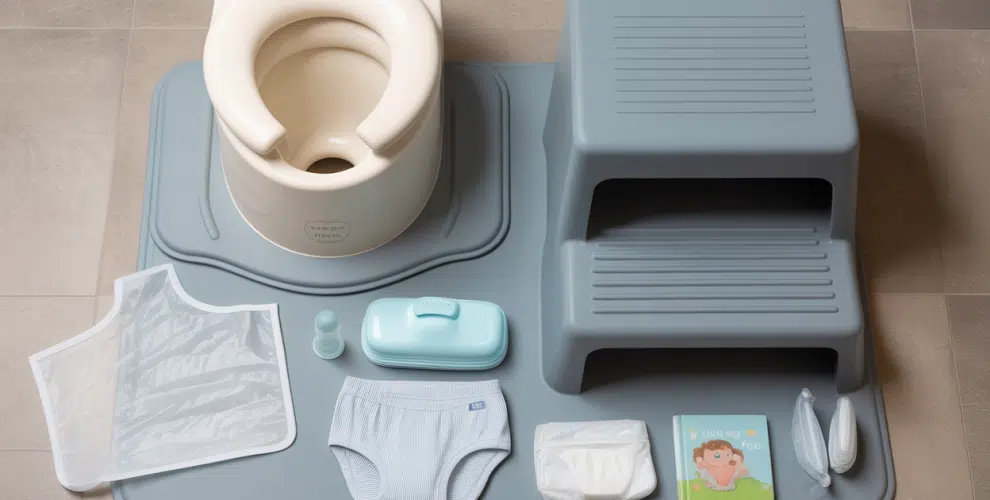
Choose a setup your child feels safe using. Floor potties are stable and low; seat reducers make the big toilet feel “just right.” A sturdy step stool supports feet for better balance and relaxed muscles, making it easier to go.

Layout essentials
- Fixed spot for potty/seat reducer; predictability invites use.
- Basket: wipes, spare underwear, wet bag, a short picture book.
- Handwashing station ready: stool at sink, gentle soap, small towel.
Clothing & timing
- Elastic waistbands; skip belts/tight jeans.
- Practice “down, sit, wipe, up, flush, wash” when calm.
- Begin after a long weekend or lighter schedule if possible.

3) Daytime training in 3 phases (with timing cues)
Phase A (Days 1–3): Teach the habit
- Invite sits every 45–60 minutes; read a short picture book while seated.
- Model handwashing sequence; keep the tone light and brief.
- If an accident happens: “Pee goes in the potty. Let’s change together.”
Phase B (Days 4–10): Read the body
- Stretch to 90‑minute intervals; coach noticing cues (“wriggly legs,” “heavy tummy”).
- Pre‑leaving, pre‑nap, and post‑meal tries become habits.
- Introduce underwear if interest is high; keep two spare sets in a wet bag.
Phase C (Weeks 3–4): Build independence
- Your child leads most tries; you prompt for car rides and longer outings.
- Fade reminders as success increases; leave visuals up until fully automatic.
- Reinforce effort: “You noticed fast and moved quickly—great listening to your body.”
KL tip: Make “potty, shoes, water” your door mantra before the car or LRT. Bring wipes and a compact seat cover for public toilets if that feels more comfortable.
4) Night‑dry strategies (gentle ladder to success)
- Protect sleep first: Keep a consistent lights‑out window; avoid sugary drinks before bed.
- Layer the bed: Waterproof protector → fitted sheet → protector → sheet for 2am speed changes.
- Last calm try: After story, offer a relaxed toilet try; no pressure if nothing happens.
- Morning habit: Toilet right after wake‑up; praise effort and awareness.
- Pause if needed: Many kids aren’t biologically night‑ready until 5–6. If soaked nights persist, return to night protection and revisit later.

5) Kind, effective behavior scripts
Refusal to sit
“Your body says no now. We’ll try again after this song.”
Accident on the floor
“Pee goes in the potty. Let’s wipe together. You’re learning.”
Poop worries
“Your tummy is working. We can read while you sit. I’m right here.”
Public toilet overwhelm
“It’s loud. Hands on my shoulders; deep breath. In… out… We’ll go fast and then find fresh air.”
6) Troubleshooting: fear, constipation, regression, travel
- Fear of flushing: Step outside while you flush; use soft ear muffs if helpful.
- Constipation: Offer more water, fruit/veg, and a relaxed sit after meals; consult a pediatrician if pain or withholding persists.
- Regression: New sibling, travel, or school changes can cause blips. Lower demands, keep the routine, and rebuild gently.
- Travel: Pack a seat cover/wipes; plan brief stops; keep the same “potty phrase” for familiarity.

7) Gear checklist: essentials to premium
Essentials
- Floor potty or seat reducer
- Sturdy step stool (toilet and sink)
- Waterproof protectors (2) for beds
- Wet bag + spare underwear/clothes
Nice‑to‑have
- Travel seat covers/liners
- Small sand timer/visual timer
- Compact wipes case
- Short picture books for calm sits
Use sparingly/skip
- Sticker charts tied to big rewards (progress is bumpy)
- Harsh cleaners/strong scents that may deter use
8) Home–school sync: how Little Playhouse helps
Consistency across settings is the superpower. Share your phrases and timing; we’ll mirror them during the day. We practise independence skills—pants up/down, handwashing, tidy routines—that make potty learning smoother. Explore our approach on Curriculum, see routines in action in the Video Gallery, and browse practical reads on News & Articles. For branches and access, visit Locations; if you’re comparing programs, check Pricing or reach out via Contact.
9) 14‑day starter plan
- Pick your tool (floor potty or seat reducer) and fix its spot.
- Make a small “potty basket”: wipes, underwear, wet bag, two small books.
- Days 1–3: Sit every 45–60 minutes; practise handwashing sequence.
- Days 4–10: Shift to 90 minutes; try before leaving home and after meals.
- Week 3: Let your child lead; prompt only for longer rides/outings.
- Any accident: calm voice, quick clean‑up, simple reset, move on.
- Nights: Layer the bed, offer last calm try, toilet on wake‑up.
Remember: No shame, no bribes—tiny steps, steady tools, and lots of “you’re learning.”